How a Two-Person Team Digitized Tribal Health Across the Southwest Using Caspio
January 15, 2026
At a Glance:
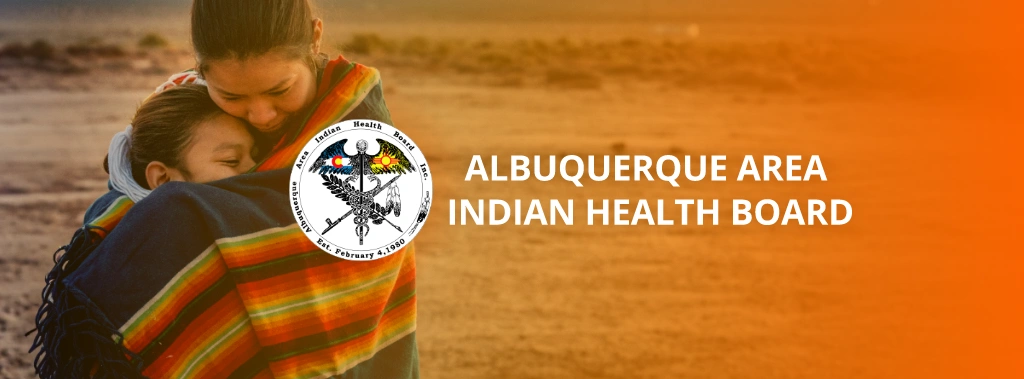
Organization: Albuquerque Area Indian Health Board (AAIHB)
Region: 27 tribal communities across NM, CO, TX, and UT
Focus: Tribal public health, chronic disease, epidemiology, and health education
Challenge: Inconsistent Access databases, privacy risks, and no scalable infrastructure
Solution: Over 20 HIPAA-compliant Caspio apps built internally by two-person team
Results:
- Secure, remote access to real-time data
- Digitized workflows for social services, COVID-19, audiology, and more
- Improved grant reporting and long-term planning
- Empowered tribes with ownership and control of their data
Before the Cloud: A Fragile Network of Flash Drives
The Albuquerque Area Indian Health Board (AAIHB) is a nonprofit that houses the Albuquerque Area Southwest Tribal Epidemiology Center. For decades, it has worked to improve the health of Native American communities across New Mexico, southern Colorado, western Texas, and parts of Utah.
Before modernizing with Caspio, AAIHB managed public health data using Microsoft Access and Excel, distributed across flash drives, desktop folders, and shared computers. Every tribal program had its own version of the truth, with little standardization and no central access.
“There were times we had to drive hours to retrieve a flash drive just to update a program”, recalled Judith Espinoza, an Epidemiologist who’s been with AAIHB for over 15 years. “Every computer might be a different level of Windows, a different level of Access”.
Even small changes required physically traveling to communities. Teams couldn’t easily collaborate. And if someone left a program, years of data could be lost. What AAIHB needed wasn’t just software, it was infrastructure that could scale securely across diverse communities while preserving data sovereignty.
From Local Files to Low Code
With limited IT staff and a need to protect tribal privacy, AAIHB turned to Caspio’s low-code platform for building secure, HIPAA-compliant web apps. Instead of hiring external developers, Epidemiologist Judith Espinoza and Database Administrator Kristen Tsosie led the effort. Bringing different strengths, Judith in public health, Kristen in information systems, they taught themselves Caspio through tutorials and hands-on experimentation.
“I’ve learned a lot through Caspio in the past five years, combining my background in computer information systems with self-teaching as we built new applications”, said Kristen.
What began as replacing Access databases with centralized, cloud-based systems quickly expanded. Over time, the pair created more than 20 applications spanning chronic disease programs, social services, and tribal partner initiatives.
Custom Apps Designed Around Communities
AAIHB’s Caspio apps are not one-size-fits-all. Each is built around how a specific tribal program operates. Judith explained, “We don’t come in with a template. We ask them, ‘How is your business? How is the flow?’ Then we build around that”.
The portfolio of more than 20 Caspio-powered apps now includes:
- Chronic disease tracking for diabetes, wellness visits, and physical activity
- Rabies vaccination registries for rural areas with stray dog exposure
- Audiology systems for hearing aid orders and appointments
- Social services portals with tiered access for staff, counselors, and courts
- Student wellness apps for surveys and school health programs
- Educational material ordering systems for health educators
Each application is designed for real-life use, from managing chronic care to streamlining school surveys. Kristen emphasized that the goal has always been to make apps approachable: “The goal has always been to provide tools that are customizable and user-friendly… so end users can serve their communities effectively”.
COVID-19: A Real-Time Test
The ultimate test came with the COVID-19 pandemic. In early 2020, AAIHB built a full-scale case tracking and quarantine monitoring system in less than a month. “We built that one in less than a month,” Judith recalled.
At the time, the state health department lacked the infrastructure for tribal-level tracking. “They gave us Excel spreadsheets,” Judith said. “We just put it all together, got it done”.
Several tribal communities adopted the system, which handled daily wellness calls, contact tracing, and vaccine monitoring. While designed as an emergency measure, some tribes still use it to track surges today.
There were also moments of pressure. One evening, Judith accidentally deleted the main case table. “I just about had a heart attack… but it was back up and running, and we didn’t lose any data,” she said of Caspio’s quick recovery support.
For Kristen, the COVID-19 project stood out as a milestone: “It was a huge program that helped the community and also the state of New Mexico”.
Protecting Privacy, Earning Trust
Data sovereignty is at the heart of AAIHB’s mission. With Caspio, they were able to implement strict role-based permissions, ensuring sensitive data stayed in the right hands.
“If you don’t have the permission to see it, you don’t get to see it, even within tribal communities,” Judith explained.
In social services portals, for example, staff entering case data cannot view counselor notes, and courts only see compliance information, not detailed medical records. To support different levels of sensitivity, AAIHB operates two Caspio environments, one HIPAA-compliant and one for lower-risk processes.
This careful design has helped build trust with tribal partners, who historically faced data misuse and privacy breaches.
Scaling Without IT Complexity
Today, more than 500 end users across multiple programs rely on AAIHB’s Caspio apps. Remarkably, the entire platform is managed by Judith and Kristen.
They process 20–30 support tickets a month through a Caspio-based helpdesk integrated with Slack. “We have about 20 to 30 a month coming in constantly now… almost a ticket a day,” Judith said.
Training was another challenge. Instead of lengthy manuals, Kristen and Judith now create five-minute video tutorials embedded directly into each app. “We try to make the videos five minutes or less… when people watch them, they get it,” said Judith.
Their focus on user experience has also shaped how apps are built. Kristen noted how small improvements make a big difference: “We’ve learned techniques where it cuts down time for us… and now we just sort of know what works”.
Data That Stays With the Tribe
Perhaps the most meaningful impact of AAIHB’s digital transformation is that tribes now own their own data.
“We’ve had some communities where we do 10 years’ worth of reports… so they can do trends and see where they need improvement,” Judith explained.
The systems persist regardless of staffing changes. Every report, every record, every workflow remains accessible, empowering tribes to plan, evaluate, and advocate with confidence.
“As long as they have internet access or a device, they can use it,” Judith said. “Otherwise, they wouldn’t have these systems at all”.
From Public Health to Platform Builders
Neither Judith nor Kristen began as software developers. One came from epidemiology, the other from systems administration. But with Caspio’s low-code platform, they’ve become architects of an entire regional health infrastructure.
“We’re not developers,” Judith reflected, “but with Caspio, we’ve become builders”.
Their story shows what’s possible when communities have the tools, and the trust, to build their own systems.
Listen to Their Journey
Judith and Judith shared their full story on Low Code / High Impact, Caspio’s official podcast. Learn how they built dozens of secure, scalable apps supporting 27 tribal communities, all without writing a line of code.
Listen now → Building HIPAA-Protected Solutions for Tribal Communities
Build Systems That Respect the Communities You Serve
Start your free Caspio trial and explore how Caspio can support secure, HIPAA-compliant health systems tailored to your mission.
Recommended Articles

Best Bolt.new Alternatives for Business Apps (2026)
READ STORY
Online Database With a SQL Backend: 7 Questions to Ask
READ STORY
9 Vibe Coding Security Risks in AI-Generated Apps
READ STORY
Build Custom Business Apps Easily: 3 Patterns
READ STORY
Caspio AI Connector Extensions: 5 Jobs for Your Tables
READ STORY
PHI and Caspio AI: Which Features Your BAA Covers
READ STORY
How AI Agents Buy Software, and Why Legibility Wins
READ STORY
Build Internal Tools With AI: Best Tools for Business (2026)
READ STORY
10 Questions to Ask Before Connecting AI to Business Data
READ STORY
Add a Role-Aware AI Chat Agent to Your Caspio App
READ STORY
Lovable Alternatives for Business and Regulated Apps (2026)
READ STORY
Vibe Coding vs. Low-Code: Key Differences and Where Caspio Fits in 2026
READ STORY
