Build HIPAA-Compliant Software
Fast and secure, built with AI on an annually certified HIPAA platform.
What Is HIPAA-Compliant Software?
HIPAA-compliant software implements the administrative, physical, and technical safeguards required by the HIPAA Security and Privacy Rules, including access control, audit trails, and encryption, and operates under a signed Business Associate Agreement (BAA) with every vendor that handles protected health information (PHI). Building HIPAA-compliant software does not require a development project or an off-the-shelf compromise. Operations, IT, and compliance teams build HIPAA-compliant patient portals, database applications, and ticketing systems in Caspio, a HIPAA-compliant AI app builder that is independently certified annually.
Transforming Healthcare With Affordable Digital Solutions
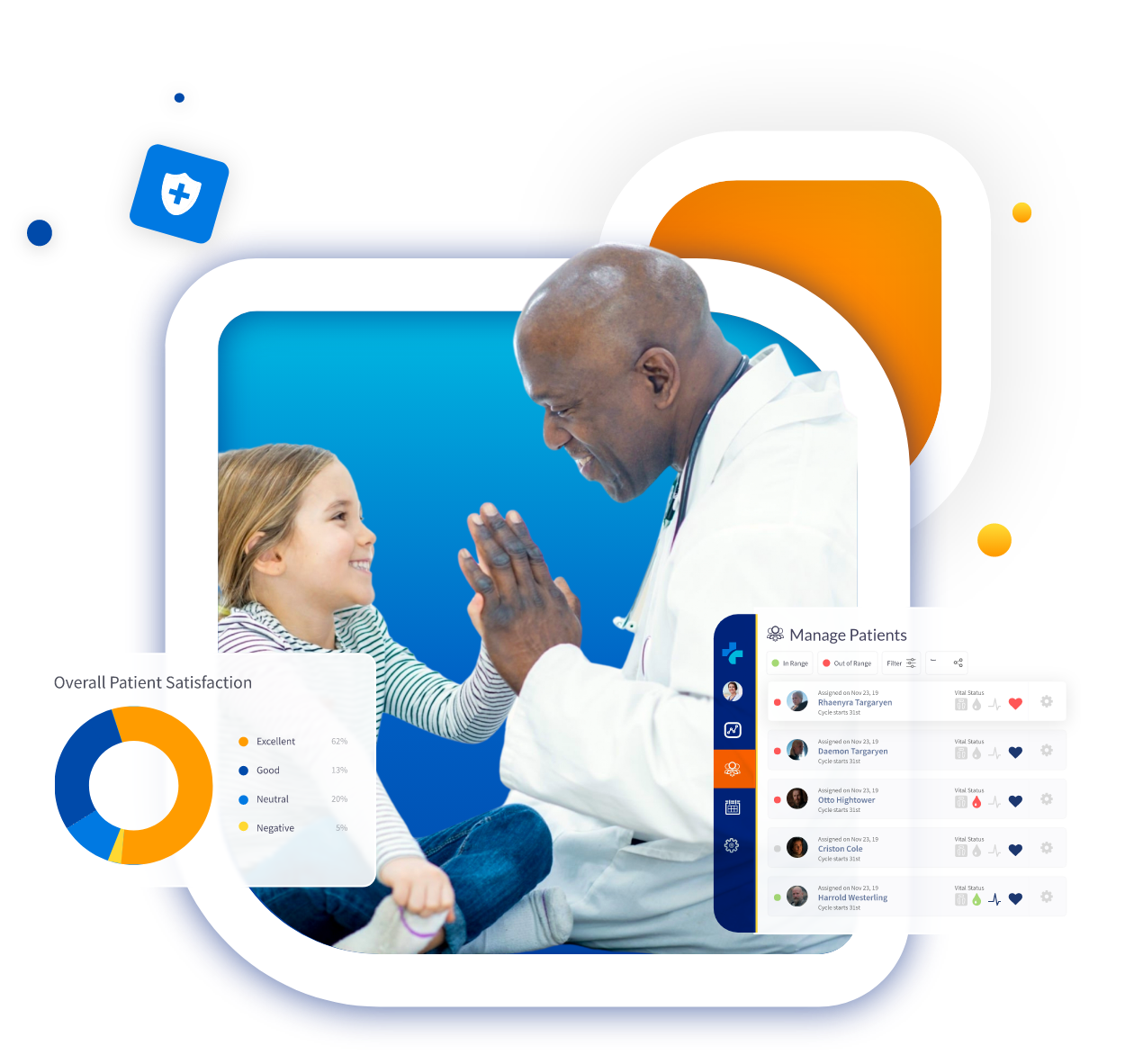
Healthcare leaders must tackle affordability with new digital strategies. However, persistent labor shortages, expensive app development, cybersecurity risks and compliance obligations increase the complexity and financial burden.
With Caspio's AI application platform, your healthcare organization can improve the patient experience, ensure enterprise-grade security and scale operations at lower cost. Regardless of the type of care, you can deliver better outcomes with the power of custom-built HIPAA-compliant software.
All-in-One Platform for Custom Healthcare Applications
AI-Powered Development
Describe the application your healthcare organization needs and Caspi, Caspio's AI, generates it as a real application your team owns, launched in days instead of months.
Cost-Effective Solutions
Caspio reduces the cost of application development by replacing traditional methods with AI-assisted building, giving you a higher return on investment.
Data-Driven Decision Making
Healthcare professionals can improve care delivery using custom interfaces and workflows that promote data-driven decisions.
Secure Cloud Database
Caspio simplifies the storage of electronic health records and other data in the cloud, ensuring secure data management for healthcare apps.
Built-in HIPAA Compliance
Caspio’s HIPAA Edition provides an exclusive environment designed to meet the stringent compliance requirements of the healthcare industry.
Scale for Unlimited Users
Caspio enables healthcare organizations to effortlessly scale their applications for unlimited users, providing flexibility to adapt as needed.
Trusted by Leading Healthcare Organizations Worldwide

Digitize and Automate With HIPAA-Compliant Software
Clinical Decision Support
Manage patient outcomes by leveraging timely, data-driven point-of-care information.
Online Patient Portal
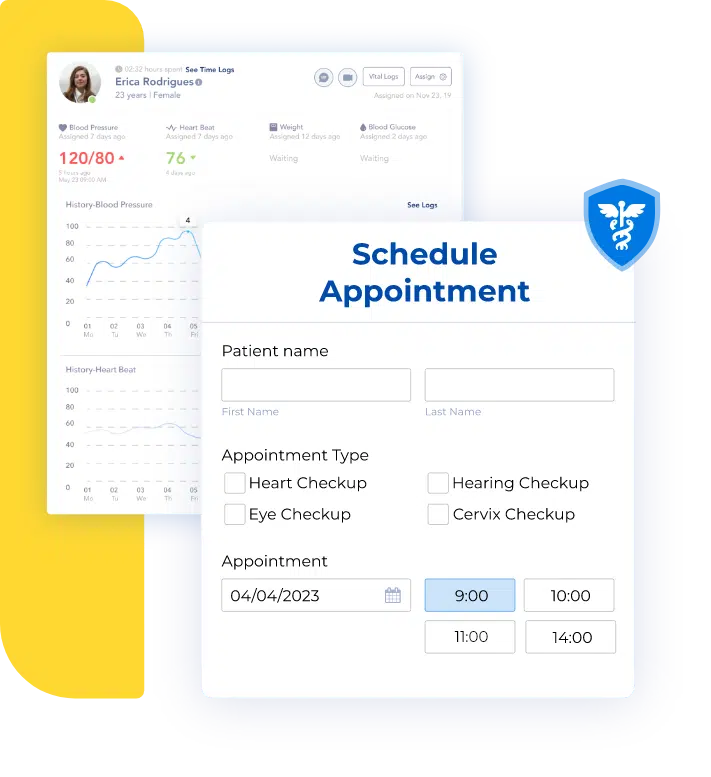
Deploy patient-facing apps providing easy access to medical resources, health tracking tools and appointment scheduling.
Care Coordination
Synchronize patient care and enable seamless collaboration among disparate healthcare providers.
Population Health
Develop apps for efficient data collection, sharing, analysis and monitoring to effectively manage population health.
Compliance Management
Automate data management and compliance processes so you can focus on quality care while minimizing risks.
Physician Directory
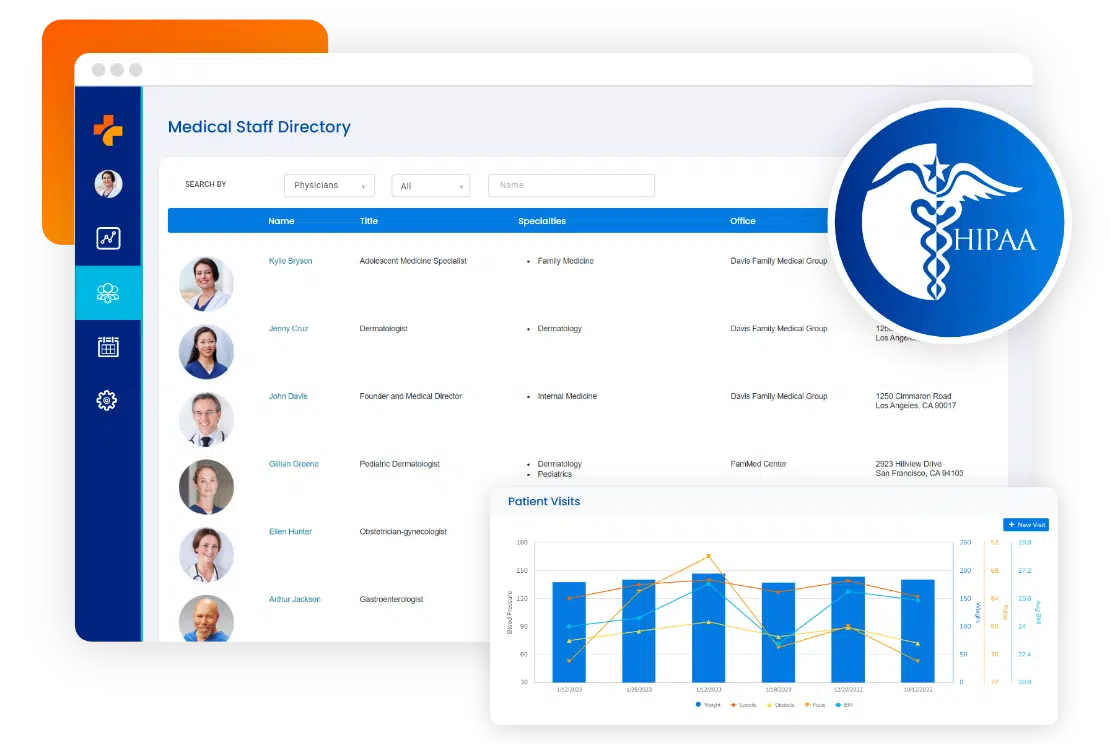
Launch a searchable database for patients to view doctor profiles, book appointments, leave ratings and more.
Capital Request System
Manage resource allocation and capital requests for different departments using an automated approval workflow system.
Outcomes Dashboard
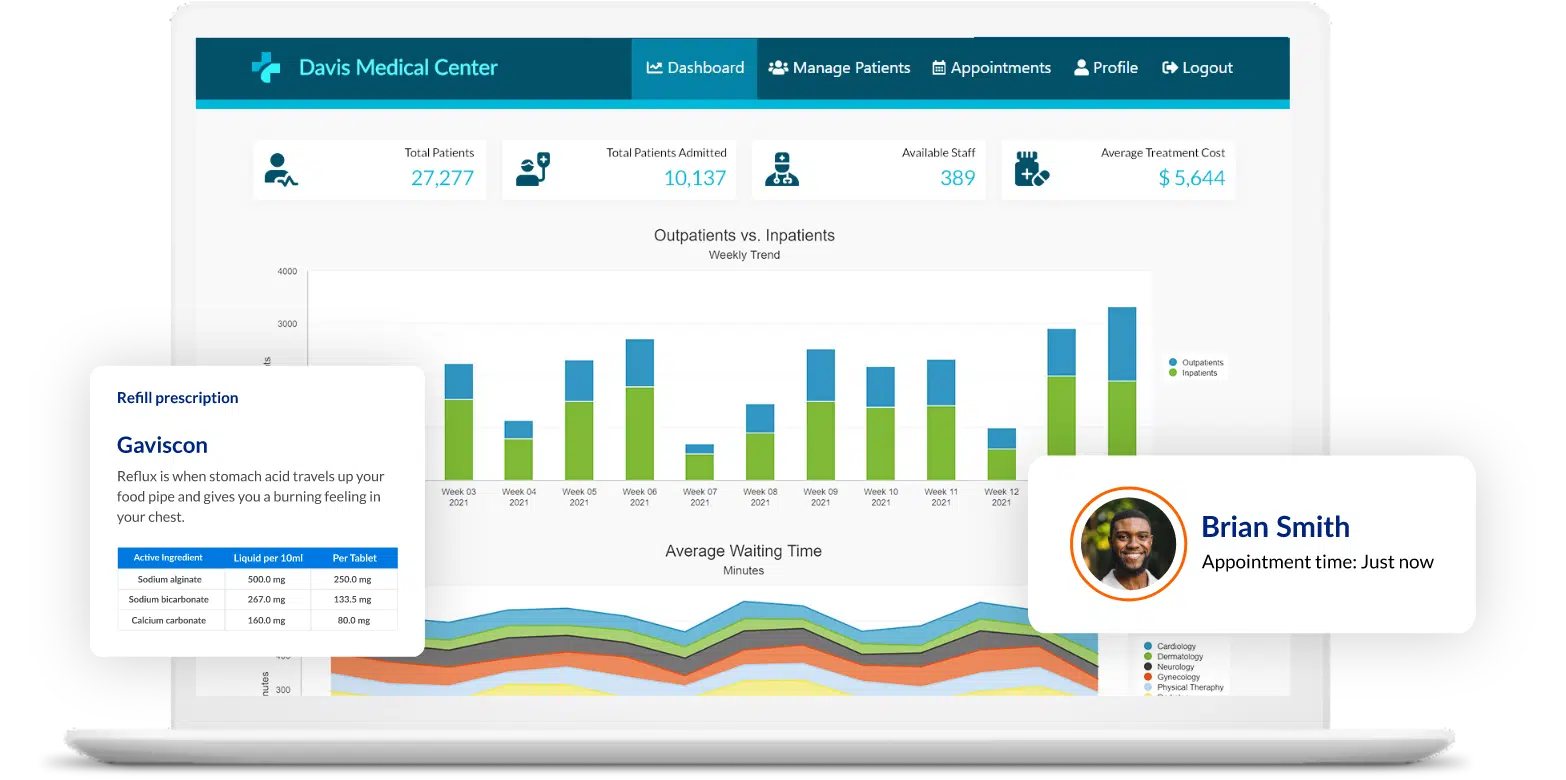
Analyze health outcome data using custom filters, drill-down reports, interactive charts and custom dashboards.
Online Calendars
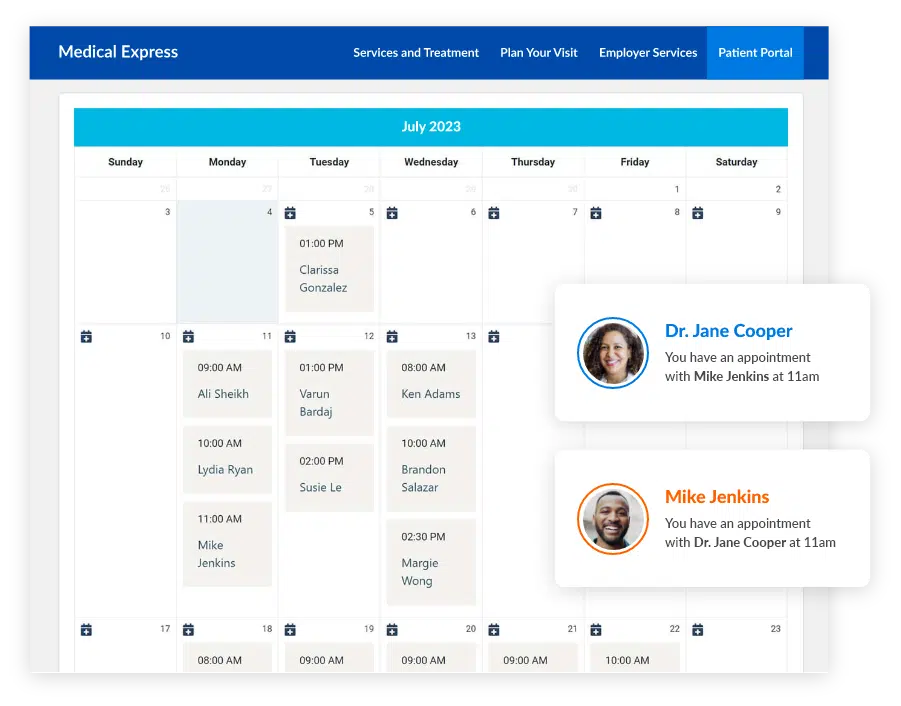
Publish internal or public-facing calendars incorporating employee shifts, scheduling preferences, special events and more.
What You Can Build With HIPAA-Compliant Software
Healthcare teams build a wide range of applications on Caspio's annually certified HIPAA platform, including patient portals, healthcare database software, and ticketing and case management systems.

HIPAA-Compliant Patient Portals
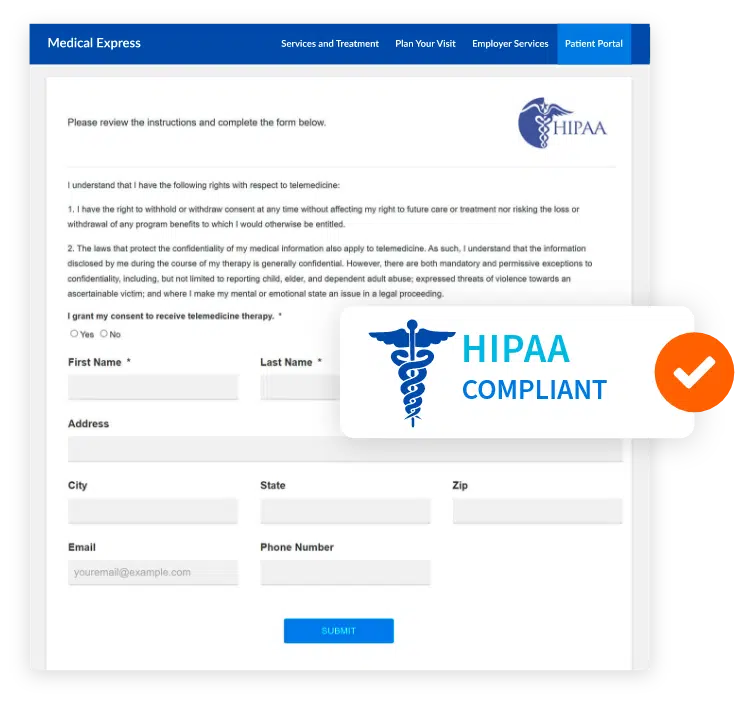
A HIPAA-compliant patient portal gives patients secure access to their health information through authenticated logins, encrypted connections, and audit-logged activity. Healthcare teams build portals on Caspio that bring appointment scheduling, health tracking tools, and medical resources into one secure experience, with role-based access and record level security ensuring each patient sees only their own records. Portals deploy as fully hosted standalone apps or embeddable components, so they run inside your existing website and match your organization's brand.

HIPAA-Compliant Healthcare Database Software
HIPAA-compliant database software stores PHI with encryption in transit and at rest, granular access control, and a complete audit trail. Caspio applications run on a SQL Server data core with role-based access and record level security, so a patient records application, referral tracker, or research registry controls exactly who sees each record and each field. Teams already storing electronic health records (EHRs) data in Caspio extend the same database into reports, dashboards, and workflow applications without moving the data.

HIPAA-Compliant Ticketing and Case Management
A HIPAA-compliant ticketing system routes patient requests, referrals, and internal cases through secure intake forms, role-based queues, and a logged history of every action taken on PHI. Most ticketing tools are built for IT help desks. Healthcare teams use Caspio to build ticketing and case management applications shaped to clinical operations instead, such as patient request queues, case management for care teams, and care coordination boards with the statuses, assignments, and notifications they define, running in the HIPAA Edition environment.
Highly Rated by Users and Industry Analysts

What You Can Build With HIPAA-Compliant Software
Caspio's HIPAA-eligible AI features operate under signed Business Associate Agreements (BAAs). Caspi, Caspio's AI, builds the application: describe what your team needs, and Caspi generates it as a real, secure application your organization owns. AI Connector Extensions bring leading AI models into healthcare workflows and automations.
Both run inside the HIPAA Edition environment, on a platform whose HIPAA compliance is independently certified annually. Connect EHR and other healthcare systems through the REST API, webhooks, and Keragon.
How Industry Leaders are Making a Difference

Caspio helped Emory increase our productivity, giving us more time to analyze data to improve patient care across the organization.

Our online patient portal reduced data entry time by 80%. And we did it securely in a HIPAA-compliant environment.

It’s easy to integrate Caspio with other systems. We build HIPAA-compliant applications in a fraction of the time compared to traditional methods.
Frequently Asked Questions
Software is HIPAA-compliant when it implements the administrative, physical, and technical safeguards of the HIPAA Security Rule, including access control, encryption, and audit trails, and every vendor handling PHI has signed a BAA. The U.S. Department of Health and Human Services (HHS), certifies no software product, so independent annual third-party certification is the strongest available proof of a platform’s compliance.
Yes. HIPAA requires a signed BAA with any vendor that creates, receives, maintains, or transmits PHI on your behalf. Caspio signs BAAs with covered entities, so the applications your team builds and the data they store on the HIPAA Edition operate under that agreement
Yes. Caspio’s HIPAA compliance is independently certified annually, alongside SOC 2 Type II and GDPR. The certification is repeated by an independent third party each year, giving healthcare organizations current, verifiable evidence of compliance rather than a one-time attestation or a vendor self-assessment.
Yes. Teams build HIPAA-compliant applications on Caspio using a visual builder, or describe what they need and Caspi, Caspio’s AI, generates it as a real application their organization owns. Applications run inside the HIPAA Edition environment, so operations, IT, and compliance teams launch portals, databases, and ticketing systems without a development project.
Yes. Teams use Caspio to build HIPAA-compliant patient portals with appointment scheduling, health tracking, and secure record access, and HIPAA-compliant ticketing systems for patient requests, case management, and care coordination. Both run on Caspio’s SQL Server data core with role-based access and record level security and deploy as complete Caspio-hosted apps or embeddable components.
Supercharge Your Healthcare Operations With Caspio
Build HIPAA-compliant software with Caspio’s all-in-one platform.


© 2026 Caspio, Inc. Sunnyvale, California. All rights reserved.